The purpose of internal events is not so much to acquire customers or build brand awareness as it is to share information and strengthen the bond with employees.
Qualitative aspects are therefore particularly relevant when evaluating their success.
These events are also characterized by how varied their formats can be.
They can be recurring (onboarding new hires) or one-off (a company anniversary), and can involve every function within the organization. It's easy to get lost in it all!
We can outline two broad categories:
- Corporate celebrations, recurring or one-off. They are essential to mark the occasion, communicate, and establish landmarks in a company's collective memory. They often become memories shared by all employees, thus contributing to company culture.
- Events related to job functions or business activity: the goal is to pass on information, values, and expertise (top management meetings, training, seminars, strategic planning, etc.). They are essential for getting information across (between decision-makers, managers, marketing, operational teams, etc.)
To measure the performance of internal events, a questionnaire (qualitative or quantitative) is often used post-event. Engagement is higher and the results provide more relevant indicators
Do you know this mnemonic device for defining your objectives? They need to be SMART:
Specific: it should be as unambiguous as possible.
Measurable: wanting a higher employee satisfaction rate is good, wanting 90% employee satisfaction is better.
Achievable: don't set goals that are out of reach. Break the objective down into several sub-steps to ensure a coherent roadmap.
Realistic: make sure you can learn from this event and easily organize it again, in order to improve. Set a goal that can be achieved with the resources available to you.
Time-bound: a topic is only interesting for a certain period of time. Make the most of it and control the timing of your event. (as a reminder, a webinar rarely lasts more than 45 minutes).
Here are a few examples of KPIs you can draw inspiration from.
💪 Measuring the strengthening of team cohesion:
Why: Whether it's through team building, a fun moment, or an unforgettable experience, cohesion is essential for building a company that works well over the long term. Create communication between your teams and measure engagement.
How: Good news, you have at least three (complementary) ways to measure team cohesion!
First, we recommend listening to participants and the various stakeholders during the event to get a general feel for it, pay attention to the subtle signals! This hot feedback is an excellent indicator that shouldn't be overlooked and that should be formalized by email at the end of the event: take notes!
To further structure the information gathering, you can create a post-event satisfaction form (with real-time statistics), made up of open-ended qualitative questions that you can send via Digitevent, such as:
- Did you feel closer to your colleagues at the end of the event?
- Did this event help you see your coworkers in a new light?
Other methods involve having hosts and hostesses offer a tablet quiz right at the exit of the event.
Consider using Likert scales to get a more clear-cut and mathematically precise answer. The data and indicators will be more accurate and your ROI more refined.
Note that the way you phrase your questions has a strong impact on the answers you receive. Depending on your objective, you may need to phrase your questions differently. 🤫
For example, you won't ask the same question if you're trying to find out the reasons behind your company's turnover (and therefore get honest answers about what's not working) versus if you want to obtain flattering statistics on employee satisfaction.
- The vaguer a question is, “Did this event help you get closer to your colleagues?” the more it will leave room for the participant's own interpretation, and generally speaking, you'll get more positive results, but ones that are often less easy to use.
- The more precise a question is, “Did you feel like you got to know your colleagues better, in a more personal and deeper way?”, the more contrasting answers you'll get, with fewer positive responses (but more honest ones).
Also consider giving participants the option to answer anonymously, which can encourage people to speak freely in a corporate context where blunt answers can sometimes be risky.
To gauge the effectiveness of your events, you can also do some A/B testing. For example, run a questionnaire before your event, then the same questionnaire some time after: has your score improved? You don't need to survey the same audience to get usable results, as long as you have a large enough sample of respondents and keep the same methodology (response time, audience type, phrasing, etc.).
💞 Measuring the transmission of company values and brand attachment
Why: Brand attachment is the emotional component that connects your company to its employees. It can be built through its values, its day-to-day actions (for example through Corporate Social Responsibility, CSR) or its benefits (gift cards, winter sports weekends, trips, incentives, etc.).
Don't hesitate to write a manifesto with your company's core convictions, as well as the values you promote and how you apply them day to day. There's nothing better for boosting your employees' morale than being part of a project that has meaning and a vision.
To spark this desire, explain the organization's role in society: what you contribute, who you help, how you do it, and above all, thanks to whom. Be grateful.
How: Internal corporate events help build brand attachment, and you can measure this during the post-event questionnaire with questions such as:
- “Do you feel more aligned with the company's values after this event?”
- “Has this event reinforced your opinion of the company (favorable or unfavorable)?”
Don't forget to anonymize your questionnaire, so you get the most honest and objective answers possible, and make sure respondents know their answers are anonymous!
🎓 Measuring training and information transfer:
Why: To measure how efficiently information was transmitted, a questionnaire covering the main topics addressed during the event is necessary.
This type of online questionnaire can be created automatically and sent to a specific category of participants with Digitevent.
Training, whether virtual or in person, often takes the form of workshops (one to few) or conferences (few to many), during which participants receive a lot of information in a short amount of time.
While a great way to keep your employees up to date, training still requires some follow-up, to make sure the knowledge was correctly conveyed, that the topic was interesting, or that the speakers were engaging.
- (Respondents who scored more than half the points / Total respondents) x 100
If you find that a large majority of respondents scored well, you got the information across, your training is effective.
☑️ Measuring the logistical effectiveness of the event:
Why: Whether it concerns your speakers, your caterer, your guests' accommodation, or even the hostess agency, all the key success factors surrounding your event can be evaluated (including your event agency, but also the event program, or the speed of badge printing!)
For example, if your event is being broadcast, be sure to select speakers who will be comfortable on camera and able to show eloquence (we produced a video series to help event speakers improve their public speaking, episode 1).
How: List the key success factors and ask your participants to rate each one (one question per criterion, ideally on a 1 to 7 Likert scale, to minimize neutral opinions as much as possible), and check in with those who get mediocre or poor scores. This is also an opportunity to ensure the continuous improvement of these providers, which is very important for your events.
🧠 Summarizing and surfacing ideas from brainstorming sessions and collective intelligence:
Why: Collective intelligence is often a driver of innovation in companies. Regardless of how often brainstorming sessions happen, pooling ideas to solve a shared problem often leads to an unexpected, consensus-based solution.
How: During your internal events, to bring out good ideas and stimulate your employees' creativity, you can use tools like Mural to set up interactive brainstorming workshops.
Then ask the managers: looking back, what would they have changed about the session to generate more ideas? Are they satisfied with the new ideas collected? Do they plan to run these sessions again? If so, more often or less often, and at what frequency? With which group of employees?
🍃 Measuring acceptance of change:
Why: Along the same lines, acceptance of change is a major topic in a company's internal strategy. It's very difficult to change processes (even more so in large companies) and to get new tools accepted.
How: To make sure the direction you've set will actually be followed, you need to check that your message is correctly understood.
Here again, you can use a questionnaire tool built into your event management solution to check that information is being passed down correctly and that tasks have been understood, for example:
- Following this event, what actions will you take to implement the new strategies?
- Are you aligned with the group's new policy?
- Do you approve of these changes?
💰 Measuring cost per participant:
Why: To go further, you can measure the cost of the session and compare it to the value estimated by managers: were the ideas generated during this session worth X euros? (corresponding to the direct and indirect costs of the brainstorming session).
How: For an accurate calculation, factor in the hourly wage rates of the people involved, the venue, the caterer, but also opportunity costs and indirect costs. Then compare this sum to the approximate (and very subjective) value of the ideas and other KPIs generated by the session.
🌱 Measuring social and environmental impact:
Why: More and more, the events industry needs to evolve and offer ways of operating that are more environmentally friendly, with a genuine social responsibility approach behind every step of the process.
How: You have several ways to calculate your social contribution: by measuring the proportion of your providers who have a CSR approach, by measuring your own carbon footprint during the event, by asking participants for their opinion on this aspect.
To go further, you could even decide to bring in a certification firm and pursue the ISO20121 standard, giving you an image (and an investment) as a player committed to environmental improvement in the events industry.
Feel free to check out our article dedicated to environmental questions in organizing an event!
Conclusion:
Internal events often require measuring more qualitative KPIs.
The goal is to understand how participants felt, more than to statistically measure certain data.
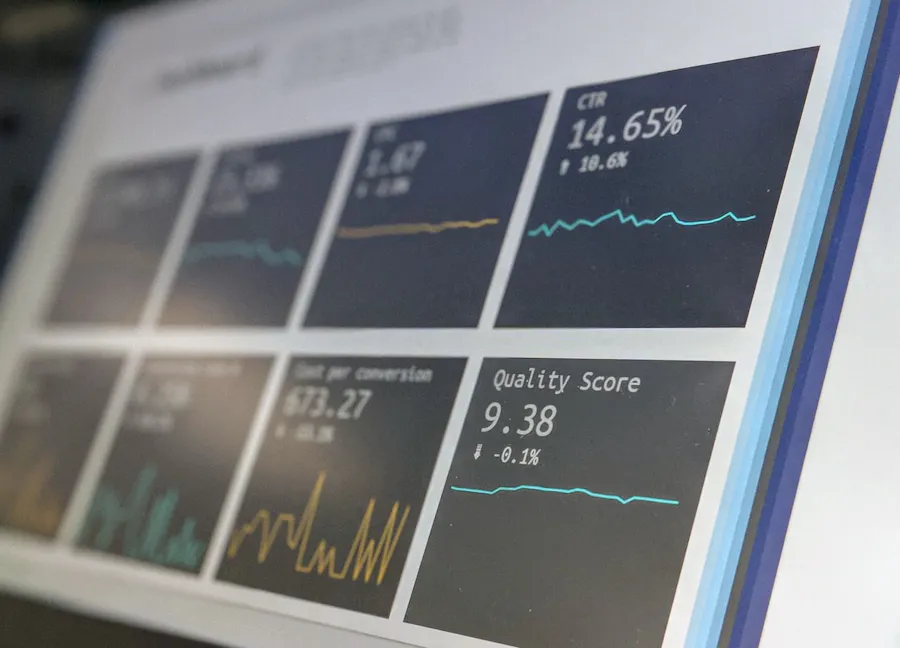
In addition, Digitevent's real-time dashboard can give you marketing information and other relevant indicators on attendance rates, response rates, and other very objective elements.
That said, it will take a lot of human interpretation and experienced managers to accurately analyze the various responses to your questionnaires. Ask your managers about the obstacles and successes of these internal events, what they would change, what they appreciated, and whether they plan to do it again during the year.
Also take the time to debrief once you have the results. Data and understanding performance are fundamental, but they should remain in service of decision-making in order to improve over time.
To go further in your strategy for defining objectives, check out this web article on OKRs.
And above all, don't forget to make your internal events fun, they'll be all the more memorable for your teams :)