In 2021, even with a great event topic, the main metric for the success or failure of a remote event remains the participation rate (and secondarily, satisfaction).
A few techniques exist to boost your participation rate, and it obviously all plays out before the event:
- The fit between the content you offer and your audiences
- Information relay by all stakeholders
- The various “gift” and promo code strategies, and the “FOMO” strategies inherited from digital marketing
- Digital advertising to targeted audiences
- A/B testing, emailing, and continuous optimization
- The timing of virtual events
- Add fun to your virtual and phygital events: SURPRISE your attendees
- The design of the event website
- Networking: one of the best ways to make your attendees active participants
- Preparing for after the event: feedback and next steps
The fit between the content you offer and your audiences
Just as a whole is the sum of its parts, your potential audience is the sum of different smaller audiences (called segments).
These segments are naturally interested in different topics (and even, more specifically, in different points within those topics). During your events, whether phygital or fully virtual, never forget the correlation between your content and your audience.
For this reason, your event should be the sum of several smaller topics. The more defined an event is, with a structure and a plan, the more reassured and confident your attendees will feel that they'll come away with useful information.
You can also (and this is the whole advantage of virtual webinars) bring in experts from around the world, to organize exceptionally high-quality video conferences and boost your visibility.
In fact, if you really want to be sure of interesting your audience, design a survey form to ask your attendees directly which subjects and themes they'd like you to cover.
Information relay by all stakeholders
Your social networks and those of your speakers and sponsors represent a lot of potential visibility, another good reason to look into sponsorship. If you have a company blog or intranet, don't hesitate to share all the relevant information (what's in it for your attendees to attend your virtual/hybrid event, when to attend, where to register, what topics are covered, which speakers).
You should also take advantage of the visibility of stakeholders outside your company: the more well-known your sponsors or speakers are, the stronger your event's potential exposure will be, and the more effective the co-branding.
Start by refining your event announcement post on social media: the visual (ask your designer or use tools such as Adobe Illustrator, Canva, Figma, etc.).
Then write a description that matches your company's tone, while making the reader want to know more. We recommend writing your copy using the AIDA structure, well known in marketing:
- A for Attention: capture your reader's attention in the first lines (often by mentioning a recurring problem they frequently face)
- I for Interest: show how your event will help solve their problem, and what your reader would gain by registering
- D for Desire: write with a touch of originality, something emotional or unusual about your topic, to make your communication stand out
- A for Action: end by encouraging your reader to take action, often by giving a link to your event website.
This logical progression, which highlights your attendees' problems while offering a solution (your event), helps convert more of your readers into attendees.
Once your post is written and published, don't hesitate to ask your sponsors and speakers to share your message. They'll generally be happy to do so at no cost, since it's also good, low-cost publicity for them.
The various “gift” strategies and “FOMO”
Marketing and behavioral psychology are useful in many areas, particularly when it comes to convincing people to take action.
One of these marketing strategies is offering gifts in the form of contests, to multiply the reach of your communication. If you have some budget, don't hesitate to offer appealing gifts, or even direct discount vouchers on your products and services.

Hold a prize draw during your event to boost attendance and keep attendees engaged throughout.
FOMO, from the English “Fear Of Missing Out,” is about creating a sense of urgency, such as an expiration date on a promo code, a registration deadline for your event, etc.
This technique can encourage your prospects to take action and reserve their spot at your event (by the way, you only have until February 28 to subscribe to our newsletter)
Digital advertising to targeted audiences
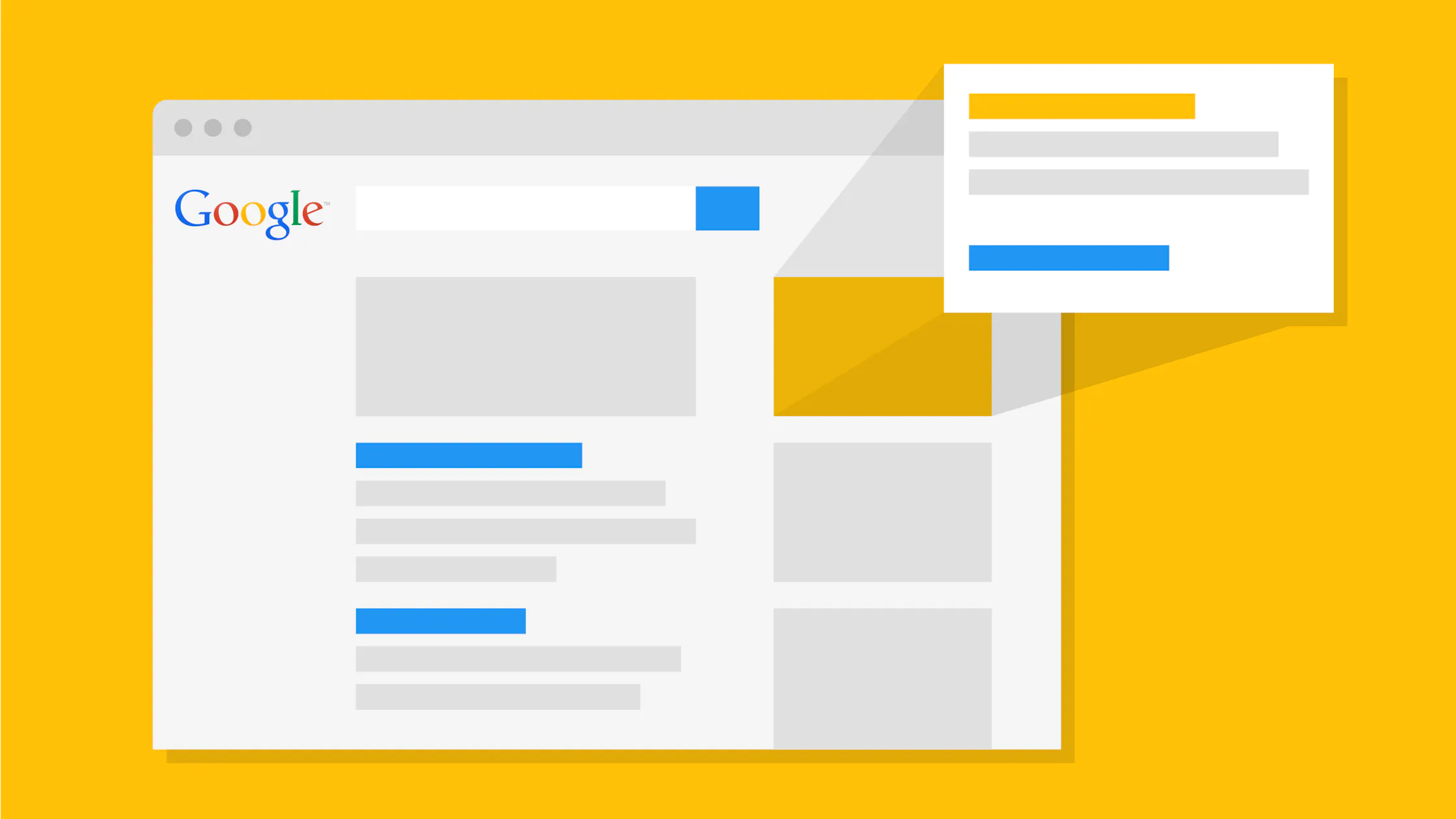
If you have a communication budget for a major event, one way to attract new prospects is simply to sponsor keywords related to your event through an ad campaign.
- Google Ads, for example, lets you feature ads in search engines based on your budget.
This technique will undoubtedly bring you an audience and may generate leads, but it's up to you to choose the right keywords to ensure the quality of the audience that sees your ads.
- You can also make use of professional networks such as LinkedIn, which may be more relevant if your event deals with a professional topic.
Even on LinkedIn, you have ways to create a sponsored post about your event: you can set it up so it only reaches certain people in certain leadership roles, in certain industries.
- Options also exist on Facebook and Instagram (which offer fairly precise audience targeting).
Don't hesitate to explore the channel where your audience is most active, but don't spread yourself too thin trying to “be everywhere.”
A/B testing, emailing, and continuous optimization
A/B testing is a way of optimizing your communications by trying two approaches (A and B) and keeping only the one that performs best.
There are several ways to run A/B testing in your event activities: prepare several audience groups and send each a different email (the subject line can differ, as can the approach, the illustration image, etc.). You'll then need to look at the results, then send the email with the best statistics to your entire segment.
This technique lets you test your communications on smaller portions of your audience, limiting the risk of a “flop.”
As you run more events, you'll naturally get better and better at your communications, which will have a significant impact on your participation rate.
Your announcement email should follow an A/B testing plan, as we've seen. But how do you write a good invitation email to maximize your participation rate?

Imagine that each email you send is a small salesperson promoting your event: what would their hook be? Your email subject line should match that hook: it should make people want to click on the email.
Test the email subject line on your colleagues and on a few small segments of your audience. Do the same for the illustration image (if you don't have one, try creating one, with Canva for example, it's always better).
For the body text, it absolutely must include the purpose of the event, the problem your virtual event will solve for your attendees, the program, the speakers, and a call to action (a registration button, for example). Sometimes add a few touches of mystery, like a surprise guest you'll only reveal during the event, to spark curiosity in your reader.
If you're worried about making mistakes in your email, check that it doesn't contain one of these 14 emailing mistakes we've listed for you.
Remember: the more polished your email, the more your visitors register.
The timing of virtual events
What day and time slot should you hold your virtual event?
This is a major challenge every event organizer knows well.
To answer this question, which can completely change your participation rate, we have several recommendations:
- Survey your audiences by asking which time slot they'd prefer, and give them two or three options.
- You should also think about the availability of the people you're addressing: seasoned entrepreneurs don't have the same availability as young parents, for example. So think “like” your audience and always act in its interest.
- Think about time zone differences, and prioritize the end-of-day time slot for the audience you want to reach first.
- If possible, hold your events at the start or end of the week, to avoid a day when work piles up for your clients and your event ends up secondary to more pressing matters.
Add fun to your virtual or phygital event: SURPRISE.
We can't say it enough: adding fun to a virtual or hybrid event ensures attendees are more attentive and engaged.

Here are a few tips, but you can find our full list for keeping your attendees engaged during your events:
- Bring in speakers outside your usual lens: never hesitate to invite a speaker who has nothing to do with your company's field. They can bring their own perspective to the topic covered in your virtual event.
- Organize role-playing games, even virtually: don't hesitate to use interactive tools, games, and quizzes about your event content. The benefit is twofold: your attendees feel engaged and don't want to be left out while everyone else takes part. Nobody likes finishing last.
On your end, you can check in real time how attentive your attendees are and how well they understand your content, all while building a better reputation for the quality of your events. - Invite a comedian for a quick sketch (even over video call, good comedians stay funny and know how to find humor in any topic) related to your theme. There are even English-speaking comedians who specialize in energizing corporate events.
The design of the event website
Your event website is the final step in the process. It will host your event, but also serve to talk about it. The website is the true virtual showcase for your event, the catalyst for information.
You should therefore pay particular attention to giving it a well-thought-out design (often through art direction, designers, etc.). You should also make sure it's fully compatible with different screen sizes, from smartphones to large 15-inch screens.
Using Digitevent will let you take care of all these aspects, but in any case, have colleagues test your website to check that the experience is pleasant and that the underlying information is useful.
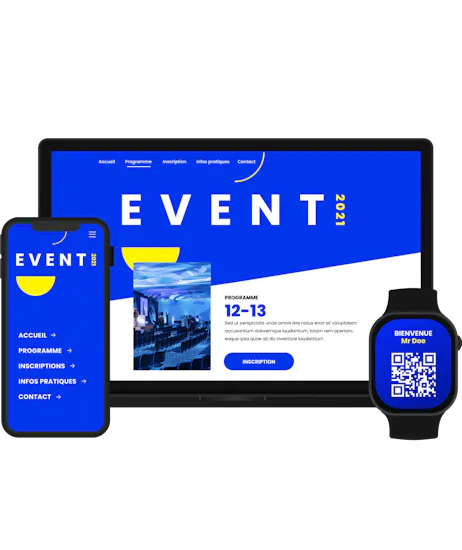
Your website should also have a menu with clear, useful sections, such as the program, the speakers, the link to the registration form, or practical information.
If you're not very comfortable with the technical side, we've developed an intuitive website builder to help you easily create the event website of your dreams.
Networking: one of the best ways to make your attendees active participants
Your visitors register for your event for one of two reasons:
- They think they'll gain something from it: relevant content, a new approach, tools that will help them solve their problems
- They can grow their network and make new professional connections, which can bring them business opportunities.
This second point is absolutely crucial for your event. If your event aims to address this second need, you should plan for a Matchmaking solution among your attendees.
Thanks to this, you let them stop being mere spectators at your event and instead take on a full, active role.
Useful across dozens of different event types, this meeting scheduling module makes your attendees self-sufficient and multiplies the added value of your digital event.
Preparing for after the event: feedback and upcoming dates
Even before your virtual or hybrid/phygital event, you can already think about how you'll gather feedback and data.
You can plan an email a few hours after the event, to find out what your guests thought of it and what they'd like to see at future events.
It's also common practice (if you have enough visibility) to share your upcoming event dates or your company's latest news.
We hope this guide helps you get a clearer picture of the best practices to apply at your next events.
We sincerely hope it helps you turn more visitors into attendees at your virtual and hybrid events.