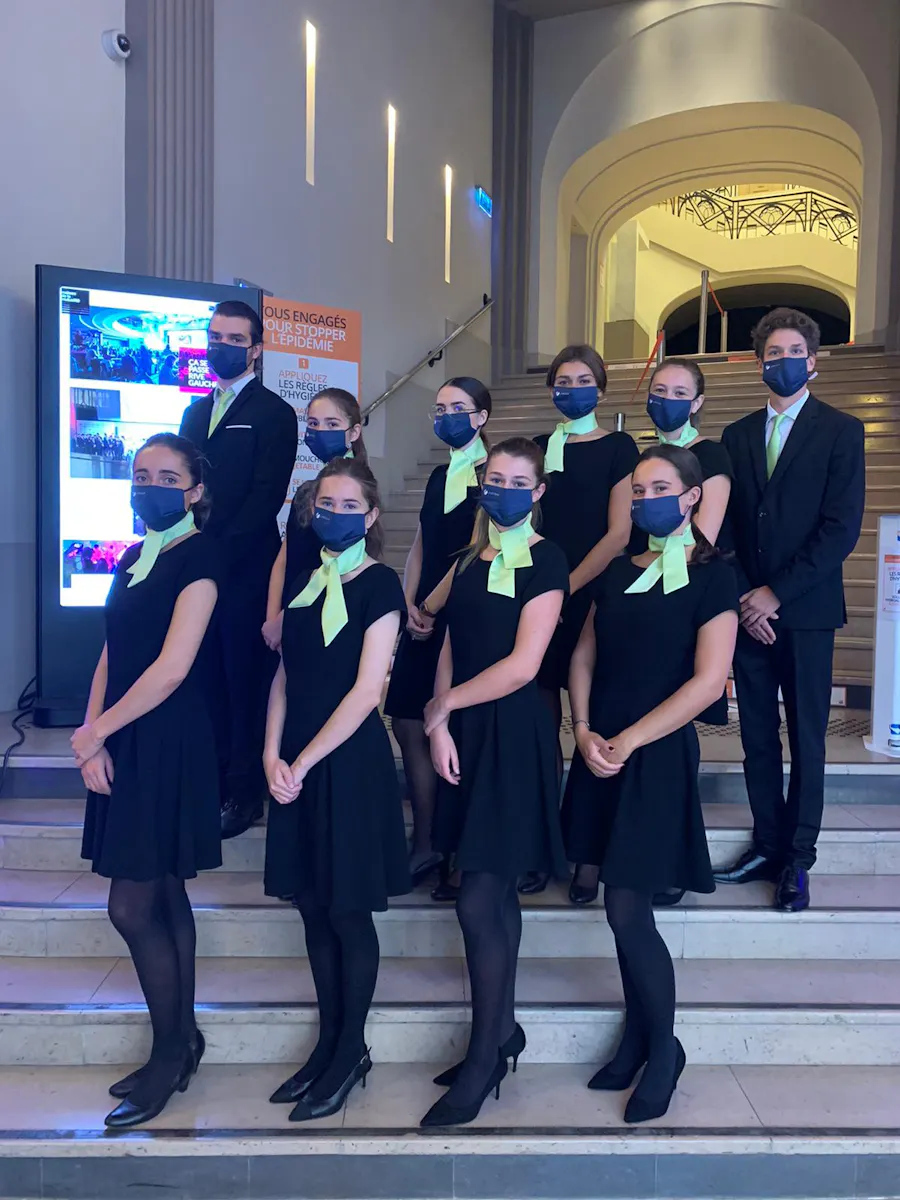
Human contact (physical or virtual) is a fundamental part of a successful event. Your event's representatives include your hosts and hostesses, who are the point of contact for your audience. It's therefore crucial to pay close attention to this aspect, while diversifying the tasks entrusted to your hosts.
Give value to the human side
Today's host or hostess isn't a decorative prop, nor an extra. These "just for show" practices are actually increasingly criticized.
Your hosts bring real value to every event, making the whole production pleasant, smooth, and human ⇒ Your hosts take care of your guests, so take care of them:
- Ensure diversity of profiles in your recruitment, as well as gender parity: send messages that align with your brand.
- Use qualified service providers rather than freelancers, by going through a caring hosting agency. For Nelson Moncorgé, of the agency La Belle Equipe: the agency is responsible for its employees' happiness at work, which is also in its own interest, as it helps retain experienced staff who become true ambassadors!
- Don't forget breaks: your hosts can't be 100% operational for the entire duration of the event if they don't take a moment to rest (not to mention that it's legally required!). Also plan for meals, snacks, and reasonable working hours.
- Don't stifle personalities, and trust your hosts to be themselves while staying professional. Get creative with outfits and uniforms to showcase your brand.
So in 2020, proactivity, anticipation, and initiative are all key words that define the job of a host or hostess.
Tasks specific to the 2020 health context
Covid has upended the events industry, particularly reception and hosting roles (notably through the shift toward virtual and hybrid events).
Still, with the right methodology, event reception has adapted. Here's the challenge and the new tasks for your hosts:
- Setting up a reception area with plexiglass screens, organized queues, respected safety distances, and clear signage.
- Distribution of masks in the colors of the brand or event organizer.
- Distribution of hand sanitizer at guest check-in.
- Temperature checks at check-in
- Cloakroom management with protective covers for each item of clothing
- Constant monitoring of health guidelines throughout the event, mask wearing, and safety distancing.
- Check-in via scanning and logging of arrivals, to help trace potential contact cases or clusters by arrival time.
- Capacity counters based on occupancy limits, to control entry flow and ensure health standards are respected.
Other tasks during the event
There are many other tasks you can assign to your hosts during the event:
- Distribution and badge printing
- Cloakroom management is critical: if a guest can't get their coat back or the line is too long, they'll leave unhappy. No matter how relevant your event is, your audience will walk away with a bad experience and associate it with the whole event. Ask your preferred agency, they can likely offer you a turnkey solution, including ticket management, cash handling, and coat racks.
- Guiding guests: because feeling lost at an event is an unpleasant feeling, your hosts should act as guardian angels for your audience and offer help proactively. It's not quite concierge service, but coming close is just as good :). If you have an auditorium or are organizing a seated event, leave the seating arrangements to your reception staff.
- Handing out goodies and useful resources : This new "more human" touchpoint adds an extra personalized experience for your guests. Take the opportunity to have your hosts and hostesses share a warm word with each guest.
- Handling small operational tasks to help with event production: folding napkins for a gala, arranging the buffet or chair layout in the room, helping set up and clear away during load-in and load-out. These are all small details your hosts can take care of, making production work easier for you.
- Passing the microphone: it's not uncommon to see guests wanting to speak from opposite ends of the room, with only one microphone, and a huge amount of time wasted between each question. Since your hosts' role is to make your event experience run smoothly, it's up to them to have several microphones ready in different spots around the room. This way, your event runs better because it's better organized. We'd also suggest offering a live interaction solution for your attendees, to make it easier for them to speak up.

- Post-event satisfaction surveys : thanks to digital tablets, your guests' feedback on the event can be collected in seconds with effective surveys. Andres Arbelaez, sales director at Handyamo, tells us more: "We offer ready-to-use kits, usable by hosts and hostesses to gather participant satisfaction in a flash after each session. Today, event organizers rightly measure event performance as part of a continuous improvement approach. Our solutions serve that goal, and we're proud to help organize better events".
Conclusion
A host or hostess is neither a reception pawn nor there "just to be an extra". It's important to put them in the best conditions so they can work properly.
As Nelson Moncorgé, founder of La Belle Equipe, puts it: "A host or hostess needs to work in a healthy, pleasant environment to deliver a quality service, which is why we put all our energy into building a close, trusting relationship with each host and hostess."
So, what soft skills do you expect from a host or hostess?