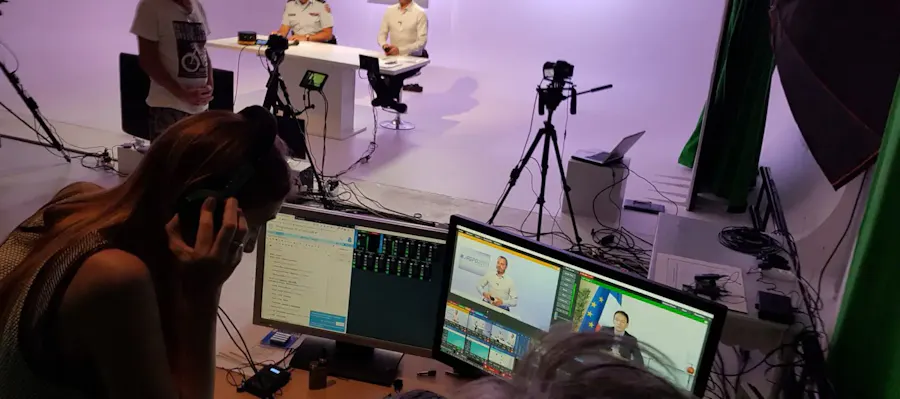
59% of marketers think hybrid will be a decisive format in their 2021 marketing strategy, according to a Sleek survey. Hybrid events are a major challenge for the coming years for all event organizers. Billed as a way to keep the connection with in-person attendees while increasing online broadcast capacity, it would seem to be the perfect format.
However, hybrid events are complex and therefore require more thorough planning than in-person or virtual events.
👌 Delivering a successful experience for all stakeholders
Hybrid events bring higher levels of complexity, felt at every level: for organizers (how to create a unified, synchronized experience), attendees (how to interact with speakers or other attendees remotely or in person), and everything else (how to showcase speakers, video capture, or even how to manage catering, etc.).
The challenge is real: how do you create this ideal event that brings all these variables together into a single synergy?
🎯 Finding the right platform for your needs
To be as effective as possible, you need to draw up a list of event objectives: generating qualified leads, increasing brand awareness, creating partnerships, etc.
With these objectives in mind, define the essential features (the must-haves) and those that are nice to have but not essential (the nice-to-haves). For example, if your goal is to help your guests meet each other, you'll need a matchmaking feature for your remote audience (must-have) and meeting room generation (must-have) more than a chat built into the event (nice-to-have).
From this defined set of options, draft a functional specification you can share with your vendors to clarify your needs. Use this specification to find the technology solution best suited to your needs.
📐 Fine-tuning the important details
Some details deserve more attention than others, especially those related to the user experience. Use an interactive online agenda so your attendees get better visibility into and engagement with the event and its various sessions.
Don't forget that timing is different for the two audiences: a one-hour session in person is far more engaging than an hour in front of a screen. You'll need to juggle these different timings to offer a pleasant experience to the virtual audience.
So you should avoid any "dead air time", unused broadcast time. For example, during a coffee break for your in-person audience, plan a dedicated activity or Q&A session for the remote audience. Plan dedicated activities for each audience so neither feels shortchanged compared to the other in terms of attention received.
On the sponsorship side, how do you guarantee your sponsors multiple exposure, both virtually and on-site? Your online event platform must be able to offer visibility before, during, and after the event.
Pay special attention to your speakers: they need to be comfortable in front of an in-person audience, but of course also in front of the camera, and share their speaking time fairly between the different audiences they're addressing.
Finally, go further than a simple in-person event streamed online: avoid "zoom fatigue" with built-in chat modules, live quizzes and polls, and other interaction tools so your remote attendees don't feel left out.
🖇️ Managing both audiences at the same time
It's crucial not to focus your event around a single audience, at the risk of shortchanging the other and losing the whole point of going hybrid.
After the event, organize an informal meeting spot for in-person attendees, and a networking session for remote attendees. It's very (too) difficult to get your audiences to communicate with each other, and it would create frustration. Instead, share an online directory of all attendees so everyone can reconnect later if needed.
🧐 Leaving no room for the unexpected
In a hybrid event, the most important component is the organization and smoothness of the overall event.
So you need to ask beforehand who's responsible for what, and how much time will be needed to carry out your project. How many project managers will need to contribute?
The question of delegation is also worth asking: would you rather handle everything in-house (you need the resources for that!) or go through an event agency used to these processes?
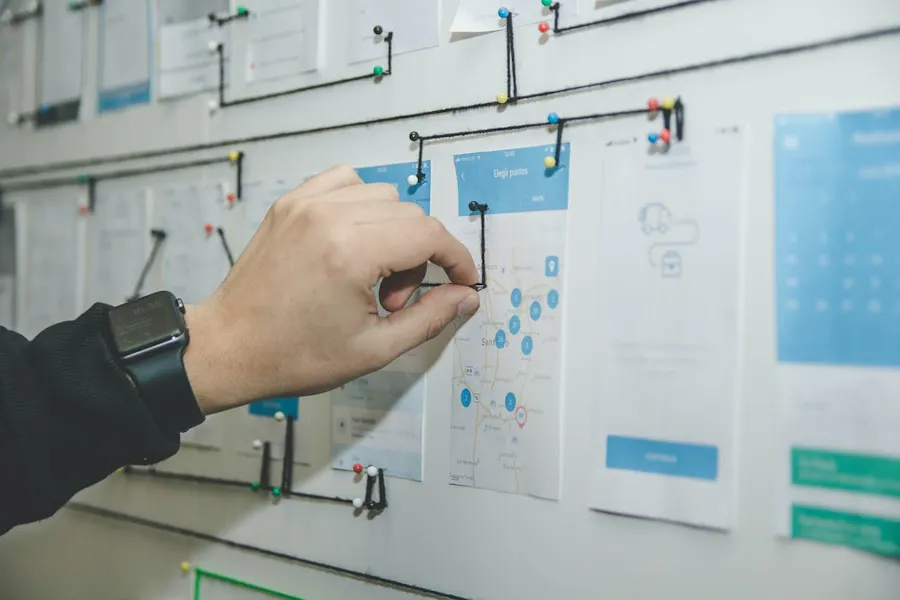
You'll also need to create an overall Run of Show for your event, laying out the schedule minute by minute, as precisely as possible. Ideally, you'll create one run of show that covers the on-site experience (taking breaks, meals, etc. into account) and another for remote attendees. This will force you to offer content without any "dead air time".
Finally, make sure you've planned for everything and have emergency procedures in place in case of problems. It goes without saying that everything should be tested beforehand (several times), but beyond that, you should also plan additional measures, for example: what's the procedure if the microphones don't work? If the video capture falls behind the live feed?
Conclusion:
To successfully plan your hybrid event, you'll need to create a journey that engages both audiences without discrimination in the quality or quantity of content, while making sure you've covered every technical eventuality and every possible unexpected issue.
Start by defining your objectives for each audience, then for the event as a whole. Draw out the essential features from that, and finish by choosing the event management platforms that best fit you and offer those features.
We hope this article has helped you better understand how to plan a hybrid event. Don't hesitate to reach out to our teams to learn about the features Digitevent offers for hybrid events :)