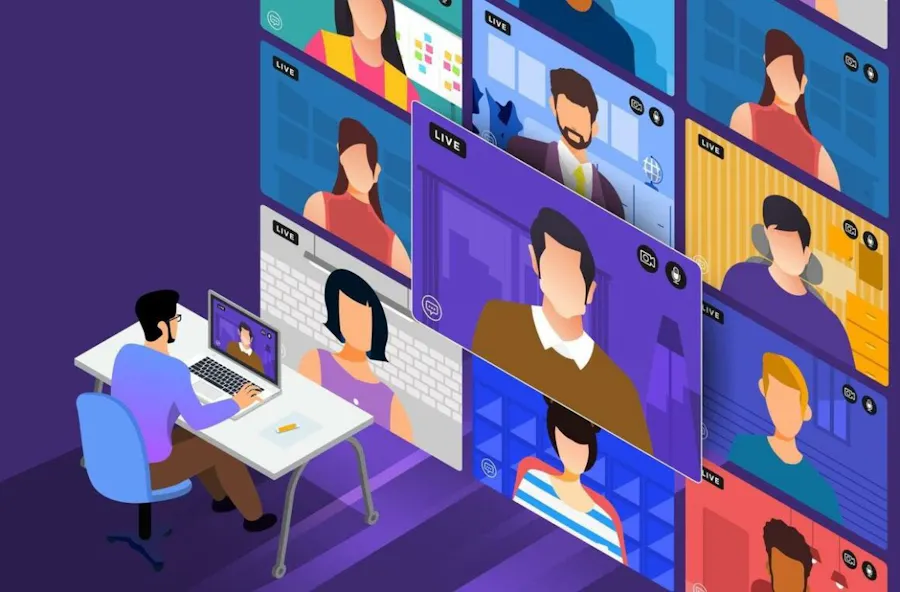
Digitevent is teaming up with Gilane Barret for a series of 9 videos to help you energize your virtual events, overcome stage fright, learn how to capture attention, and much more.
Gilane hosted television shows for more than ten years. A host on CNews and BFMTV, he still regularly appears on various programs.
Here are these tips to be engaging, even behind a screen:
1: Prepare your event
Think of your event like a television show, prepare a "rundown" to keep a steady pace, and make sure everyone knows what they need to do, minute by minute.
2. Play on interactivity
Ask your guests about their current mood and display the results as word clouds, to give you material for your virtual event introduction.
Kick off the dynamic with one or two prepared questions to encourage participants to ask others.
3: Getting comfortable with the camera
Production should harmonize the quality of your speakers (sound, video, lighting, etc.). Think of the camera as a friend: smile at it, look at it often. Don't be static in front of a machine, be dynamic, as if facing a friend.
4: Improve your eloquence
There's only one key to good eloquence: a clear and concise message. Use short sentences and create pauses. Have a strong and steady voice.
5: Start with the end
In television as in virtual events, it's best to start with the main information, giving it right from the beginning. Choose an approach that will hook your participants from the very start of your event!
6: Manage stage fright
Mentally visualize the scene to help you better handle it on the big day. Practice belly breathing to calm your heart rate and appear calmer when you go live. Pay attention to your first words and your smile.
7: Media training
Prepare your speeches and watch your test recordings to notice your verbal or physical habits. The best improvisations are the ones that aren't improvised.
8: Which pitfalls to avoid
Take care of your look and the set background. If you use notes, write simple keywords on them, never full sentences. Remember that a live session is a conversation, not a reading of information.
9: Host the discussion
To lead panel discussions, find an angle and a deep question on which there's no real consensus. Build on your speakers' explanations and anecdotes, which can feed your transitions and your progress through the event's storyline. Prepare several topics that your speakers will be able to answer and debate.
We hope these few tips were useful to you, and we're ready to help you organize your next in-person, virtual, or hybrid event as best we can :)
We would also like to thank Me And My Ours for the production, as well as WeWork for the filming space.